
The eel
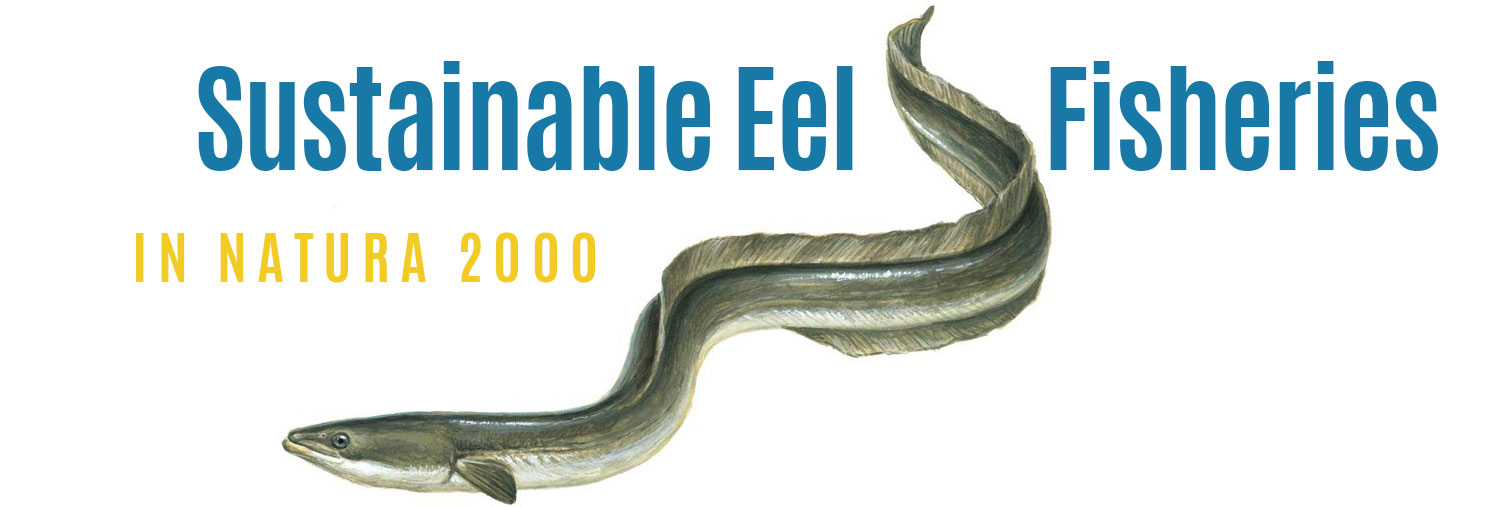
The European eel (Anguilla Anguilla) is a species of fish with a very complex life cycle and one that can exceed both one meter long and 20 years of age. They spawn and hatch in the Sargasso Sea, in the Atlantic Ocean. Over 2 or 3 years thhey drifth accross the Atlantic among the plankton, pulled by ocean currents and arrive at estuaries and the mouths of European rivers. Once there, they ascend through them to the midsections. After 6-12 years for males and 9-12 years for females, eels reach maturity and they must begin the journey back to their place of birth. There, they will spawn and die. During the different stages of their lifecycle, eels pass different phases. From the larval stage (leptocephalous) to mature eels, named ‘silver eels’, they undergo several changes and transformations.
Until quite recently, the eel lifecycle has been a mystery. In fact, until the 18th Century they were considered to come from a family of worms, and it was not until the 19th Century when leptocephalous (eel’s larva) were recognised to be the same species as the eel. Nowadays, there is very limited information about the exact breeding site, some aspects of their biological cycle, their migration, or the status of their population.

This species plays a key role in certain places of Natura 2000 and particularly in coastal wetlands and lagoons of the Iberian southeast. For instance, in the preying of invertebrates, or in the transport of matter and energy throughout rivers or between rivers and the sea throughout their migration.
The eel is considered by the IUCN as a globally Critically Endangered species, due to the alarming decrease of the population. The main causes of its decline are the loss of its habitat, the proliferation of great fluvial infrastructures which prevent its migration, and overfishing; even though they are threatened by other factors such as pollution. Indeed, it is considered that in the last 30 years, the number of young eels may have decreased by 90% and more than 50% in the case of mature eels. As for the southeast, fisheries captures have decreased progressively in the recent decades. Nevertheless, there is no exact data about the population or decline of this species.

Free actions financed by the EMFF (European Maritime and Fisheries Fund)

This project involves the collaboration of:
